Super Resolution for Humans

Abstract
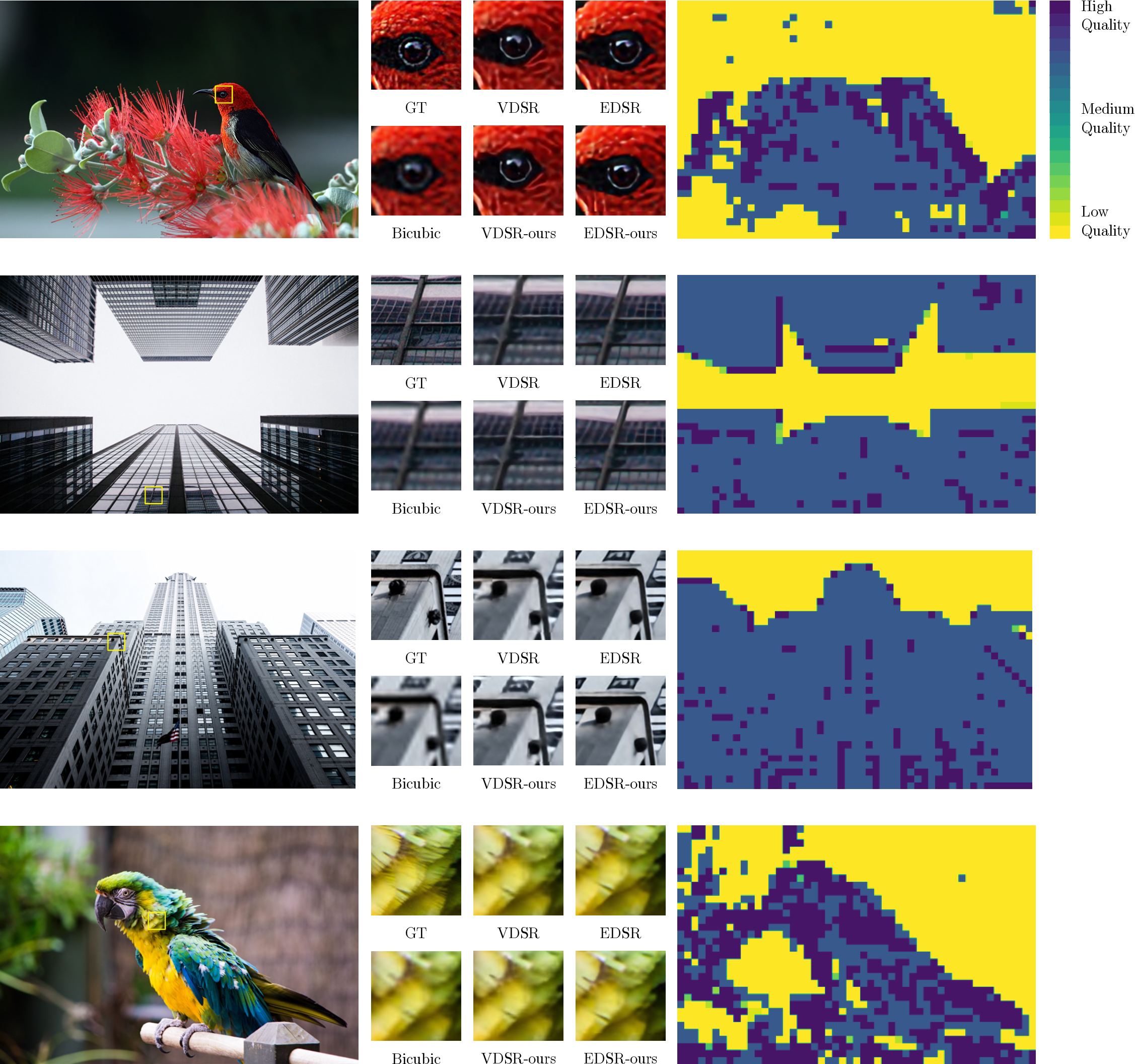
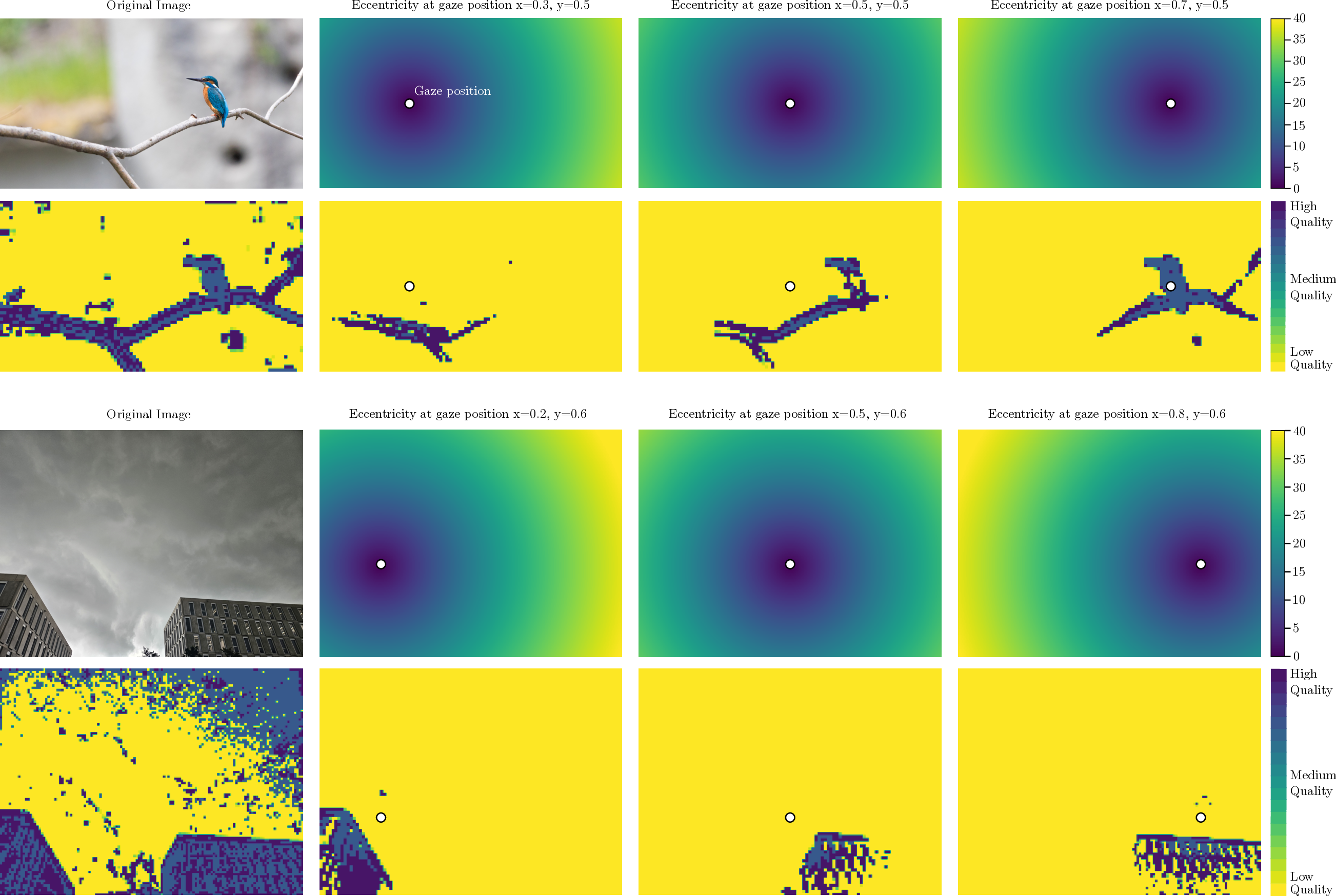
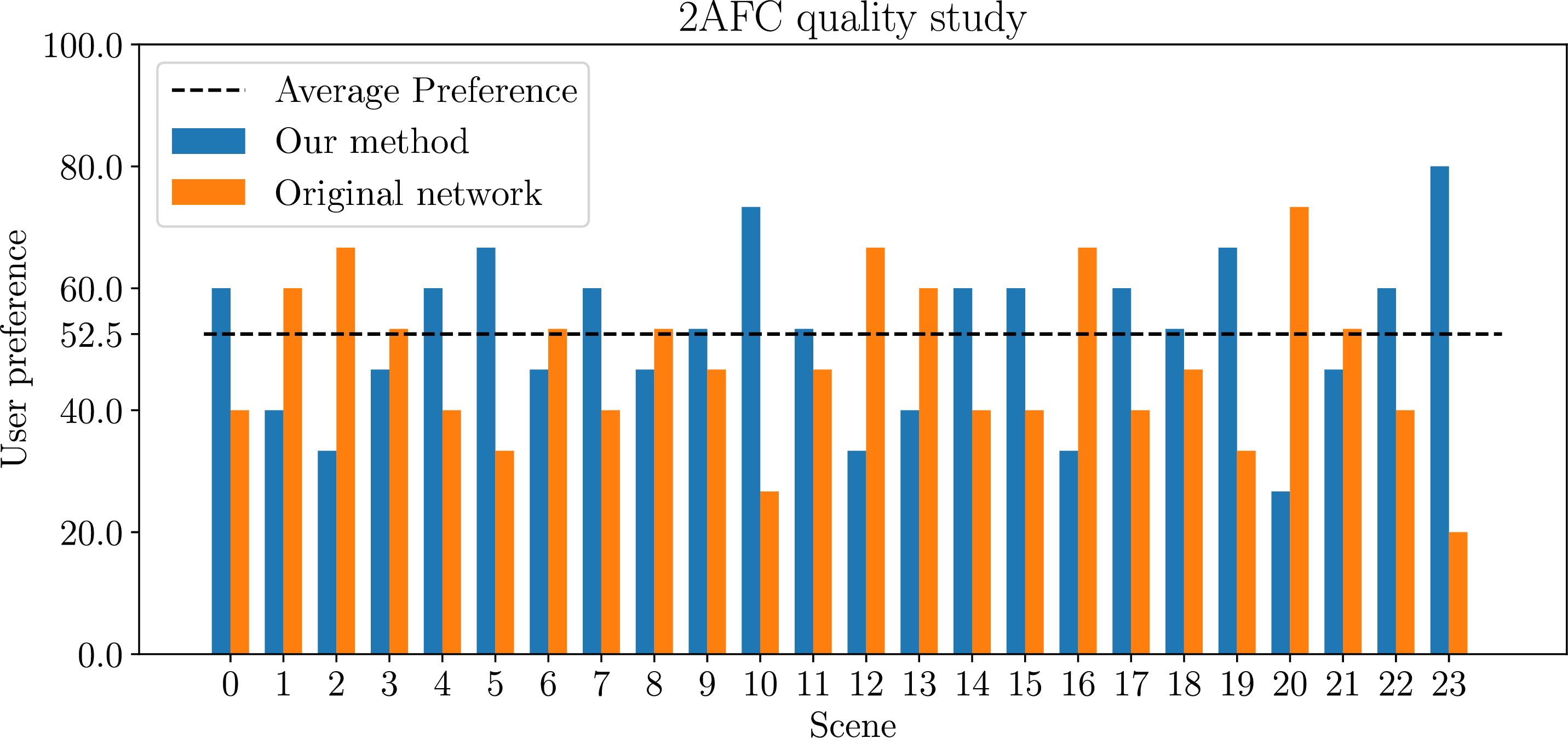
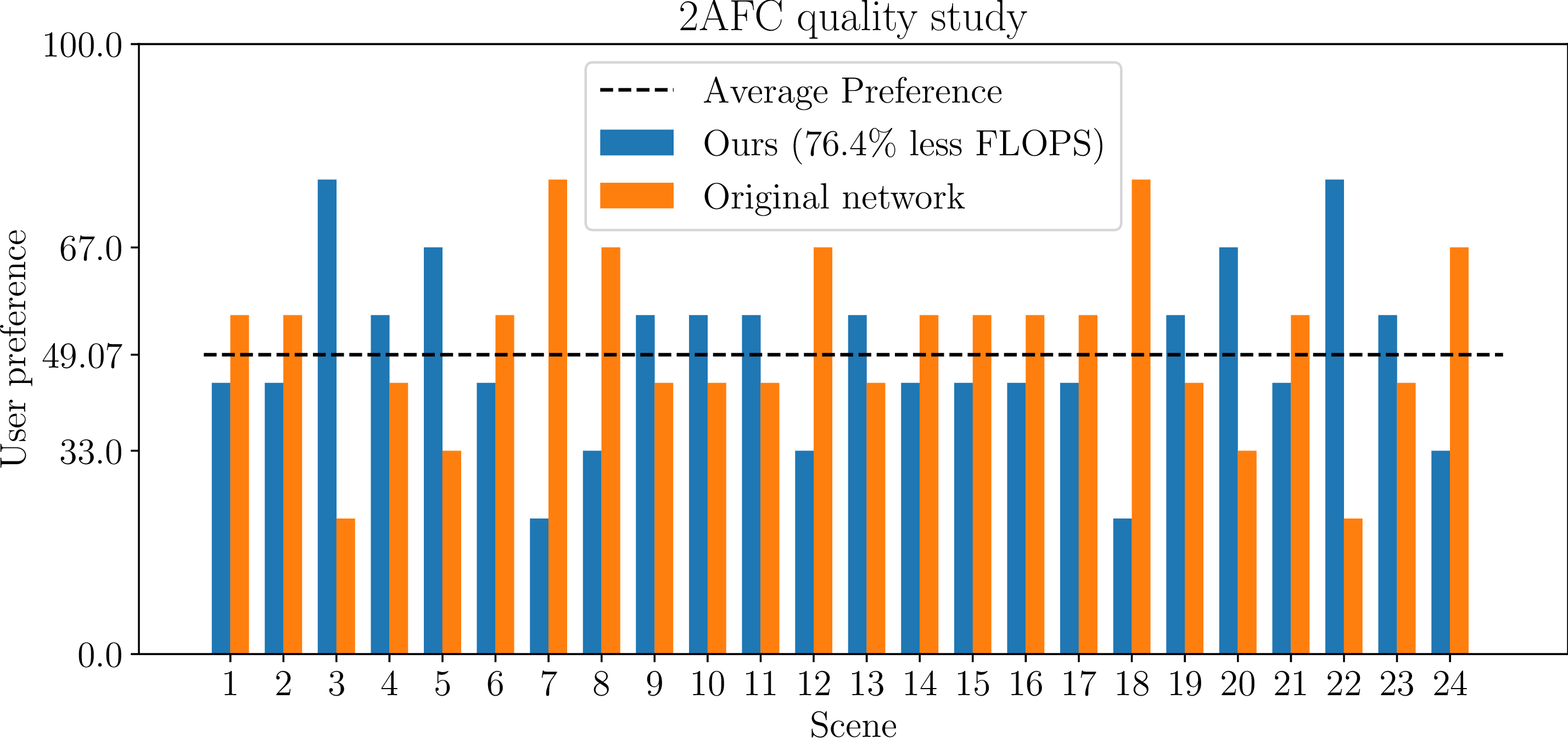
Super-resolution (SR) is crucial for delivering high-quality content at lower bandwidths and supporting modern display demands in VR and AR. Unfortunately, state-of-the-art neural network SR methods remain computationally expensive. Our key insight is to leverage the limitations of the human visual system (HVS) to selectively allocate computational resources, such that perceptually important image regions, identified by our low-level perceptual model, are processed by more demanding SR methods, while less critical areas use simpler methods. This approach, inspired by content-aware foveated rendering, optimizes efficiency without sacrificing perceived visual quality. User studies and quantitative results demonstrate that our method achieves a reduction in computational requirements with no perceptible quality loss. The technique is architecture-agnostic and well-suited for VR/AR, where focusing effort on foveal vision offers significant computational savings.
Method Predictions
VR Application
User Study Results
Citation
@inproceedings{10.1145/3721250.3742985,
    author = {Karpenko, Volodymyr and Tariq, Taimoor and Condor, Jorge and Didyk, Piotr},
    title = {Super Resolution for Humans},
    year = {2025},
    isbn = {9798400715495},
    publisher = {Association for Computing Machinery},
    address = {New York, NY, USA},
    url = {https://doi.org/10.1145/3721250.3742985},
    doi = {10.1145/3721250.3742985},
    booktitle = {Proceedings of the Special Interest Group on Computer Graphics and Interactive Techniques Conference Posters},
    articleno = {53},
    numpages = {3},
    series = {SIGGRAPH Posters '25}
}